If you’re considering a dental implant in Metairie, you’ve probably done some research. You know about the titanium post and the process where your bone fuses with the implant. You know about the healing period, usually three to six months, and you know that the success of the implant depends on how well that healing goes.
What you may not know is that some dentists use a technique to support that healing, and it comes from your own blood.
It’s called PRP, or platelet-rich plasma. At Revival Dental, Dr. Rachel Neumeyer has specific training in it. Her bio lists phlebotomy use in dentistry, which is the training required to draw and process blood for procedures like PRP. It’s an unusual credential for a general dentist, and it changes what’s possible for implant patients.
Here’s what PRP is, how it’s used in implant dentistry, and why Dr. Neumeyer’s training matters.
What PRP Actually Is
PRP stands for platelet-rich plasma. It’s a concentration of your own blood, processed to increase platelets and growth factors.
Here’s how it’s made. A small amount of blood is drawn, usually from your arm. That blood is placed in a centrifuge, which spins it at high speed to separate the components. The centrifuge separates the red blood cells and plasma, and concentrates the platelet-rich portion. The procedure uses that concentrated plasma.
The key point is that it’s your own blood. It’s not a synthetic material, a donor product, or a medication. It’s a concentration of what your body already produces.
How PRP Is Used in Implant Dentistry
PRP has several applications in implant dentistry, and they all come down to one thing: supporting healing:
- Supporting bone grafting. If you need a bone graft before an implant, you can mix PRP with the graft material or apply it to the site to support the body’s healing response. The growth factors in the plasma can help the graft integrate with your bone more predictably.
- Supporting soft tissue healing. If the implant procedure involves gum tissue, you can apply PRP to the site to support healing and reduce discomfort.
- Supporting the implant site. In some cases, PRP is used at the time of implant placement to support the initial healing response and early osseointegration.
- Supporting extraction site healing. If a tooth is being extracted and an implant is planned for later, PRP can be used at the extraction site to support bone preservation.
Evidence for PRP is still developing and doesn’t guarantee success, but it’s a tool some Metairie dentists use to support healing when it matters most. Clinical results have been promising.
Why Phlebotomy Training Matters
Here’s what makes Dr. Neumeyer’s approach different. Drawing blood for PRP requires specific training. It’s not the same as drawing blood for a medical lab.
It requires knowing how to draw safely, handle the sample, process it in the centrifuge, and apply it during the procedure. It also requires understanding the medical considerations: certain medications, conditions, and blood disorders may affect whether PRP is appropriate.
Dr. Neumeyer’s bio specifically lists phlebotomy use in dentistry. That means she’s trained to perform the blood draw and the processing in-office, which makes the procedure more convenient and more controlled. The blood is drawn, processed, and applied in the same visit, without an outside lab or a separate appointment.
That’s not a standard offering at every practice. It’s a specific credential, and it matters for patients looking for every advantage during the implant process.
When PRP Might Be Recommended
PRP isn’t necessary for every implant case. A straightforward single-tooth implant in a healthy patient may not need it, but it’s more likely to be considered in some situations. For example:
- Bone grafting cases. If the site needs a graft before the implant, PRP can support the graft’s integration.
- Multiple implant cases. If several implants are placed at once, PRP may support healing across the whole area.
- Patients with healing concerns. If a condition or medication affects healing, PRP may help support the body’s response.
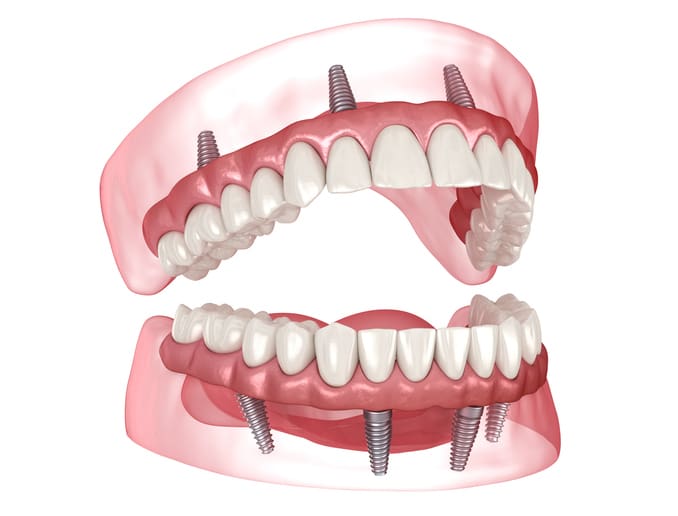
- Full-arch cases. In All-on-4 or similar full-arch cases, PRP may support healing at multiple sites.
- Patients who want every advantage. Some patients simply want to do everything they can to support a good outcome. PRP is one tool in that toolkit.
Dr. Neumeyer will discuss whether PRP is appropriate for your case during the consultation.
What This Means for Patients in Metairie
If you’re considering an implant in Metairie, Kenner, Harahan, or anywhere in the New Orleans metro area, you have options. Many practices can place an implant. Fewer offer PRP, and fewer still have a dentist with specific phlebotomy training to perform it in-office.
Dr. Neumeyer is a New Orleans native who trained at LSU and has been recognized as a Leading Doctor in New Orleans by Inside New Orleans magazine for four consecutive years. Her combination of implant training, facial esthetics certification, and phlebotomy training is unusual in this market. This is why her implant care is more comprehensive than what you might find at a typical practice.
Our practice is right in the heart of Metairie and is in-network with most dental insurance plans. If you don’t have insurance, the team can talk through your options.
What to Ask Any Implant Dentist
If you’re comparing practices and want to know whether PRP is available, ask these questions:
- Do you offer PRP for implant procedures? If the answer is no, that’s a limitation.
- Who performs the blood draw? If the dentist does it in-office, that’s a different level of control than sending you to a lab.
- What’s the evidence for PRP? A dentist who can explain the reasoning and the research is a dentist who’s done the homework.
- Is it included in the cost or an add-on? Ask about the cost upfront to avoid surprises.
At Revival Dental, Dr. Neumeyer can answer all these questions and explain whether PRP is right for your case.
Now is The Time to Visit Revival Dental
If you’re considering an implant and want to know whether PRP is part of the plan, call Revival Dental at (504) 264-6013 or request an appointment online. You don’t have to settle for the standard implant process. You just need a dentist who’s invested in the details that support healing.
Our trusted dental office is in Metairie, and we serve patients from Metairie, Old Metairie, Kenner, Harahan, and across the New Orleans metro area.